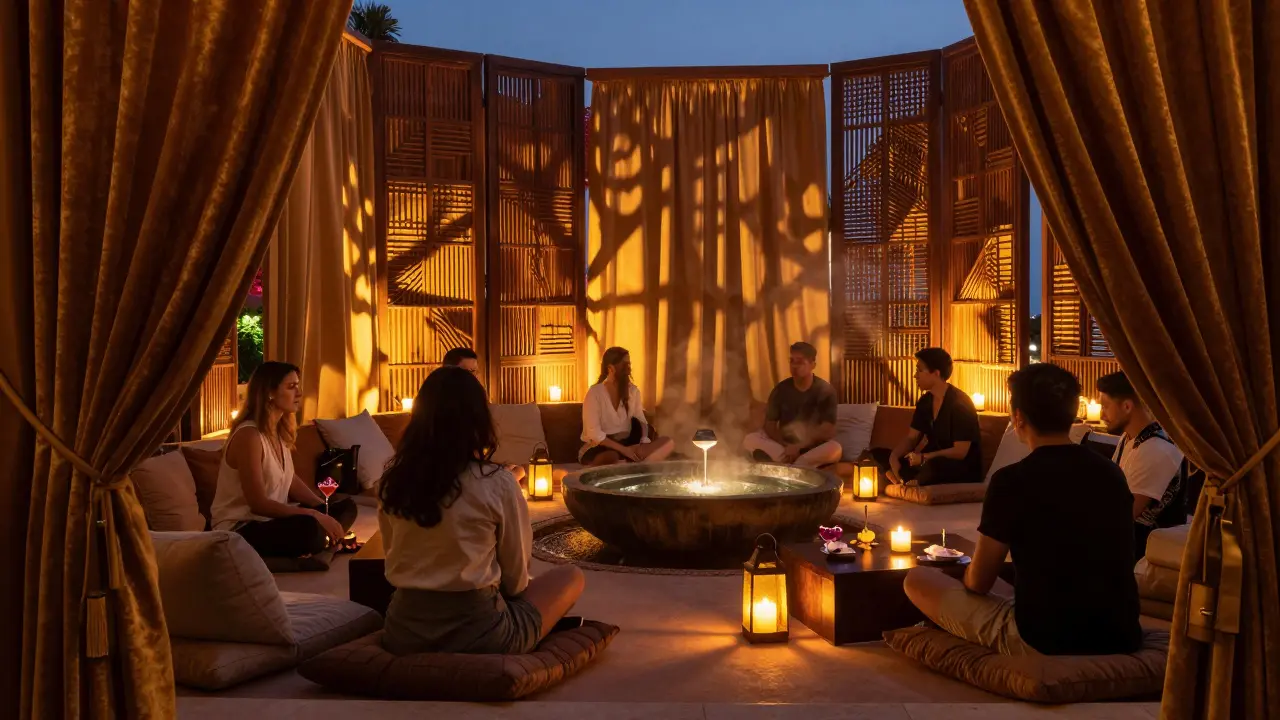
You walk through the heavy velvet curtain, and suddenly the world outside disappears. The air is thick with incense, the lighting dips into amber and gold, and a slow, hypnotic beat pulses through the room like a second heartbeat. You’re not just in a bar-you’re inside a dream that someone else built with candles, sitars, and silence. This is Buddha Bar.
It’s not just a place to drink. It’s a full sensory reset. The kind of night that sticks to your skin, lingers in your memory, and makes you wonder why every other club feels so loud and empty in comparison.
What Makes Buddha Bar Different?
Most bars want you to dance, shout, or scroll through your phone. Buddha Bar wants you to breathe.
Founded in Paris in 1996 by restaurateur Raymond Loy, Buddha Bar didn’t start as a nightclub. It began as a lounge where people could unwind after dinner with ambient music, dim lighting, and cocktails that tasted like exotic dreams. The concept spread-first to London, then to Monaco, and later to Dubai and Tokyo. But the Monaco location? That’s the one that turned it into legend.
Here, the music is a slow fusion of Eastern melodies, downtempo beats, and whispered vocals. You’ll hear a Tibetan flute float over a bassline that feels like ocean waves. A sitar plays beside a muted drum machine. No one is screaming over the music. No one is trying to be seen. You’re not here to be noticed. You’re here to disappear-for a little while-into something beautiful.
Why People Return Again and Again
People don’t come to Buddha Bar for the drinks. They come for the atmosphere.
One regular, a retired architect from Geneva, told me he comes every time he’s in Monaco. “I don’t drink much,” he said. “I just sit by the window, watch the lights on the harbor, and let the music pull me out of my head.”
That’s the magic. It doesn’t force you to have fun. It lets you find it quietly.
There’s no VIP section with bottle service flashing like a neon sign. No bouncers checking IDs with a scowl. No line stretching down the street. You’re not waiting to get in-you’re waiting to be let in.
And when you’re finally seated on one of the low velvet cushions, surrounded by carved wood screens and flickering lanterns, you realize: this isn’t a bar. It’s a sanctuary with a bar.
The Monaco Location: Where the Magic Lives
The Monaco Buddha Bar sits in the heart of the Monte Carlo district, tucked into a quiet alley behind the Casino. The entrance is unassuming-a simple door with a small brass plaque. No flashing signs. No crowds. Just the sound of water trickling from a hidden fountain.
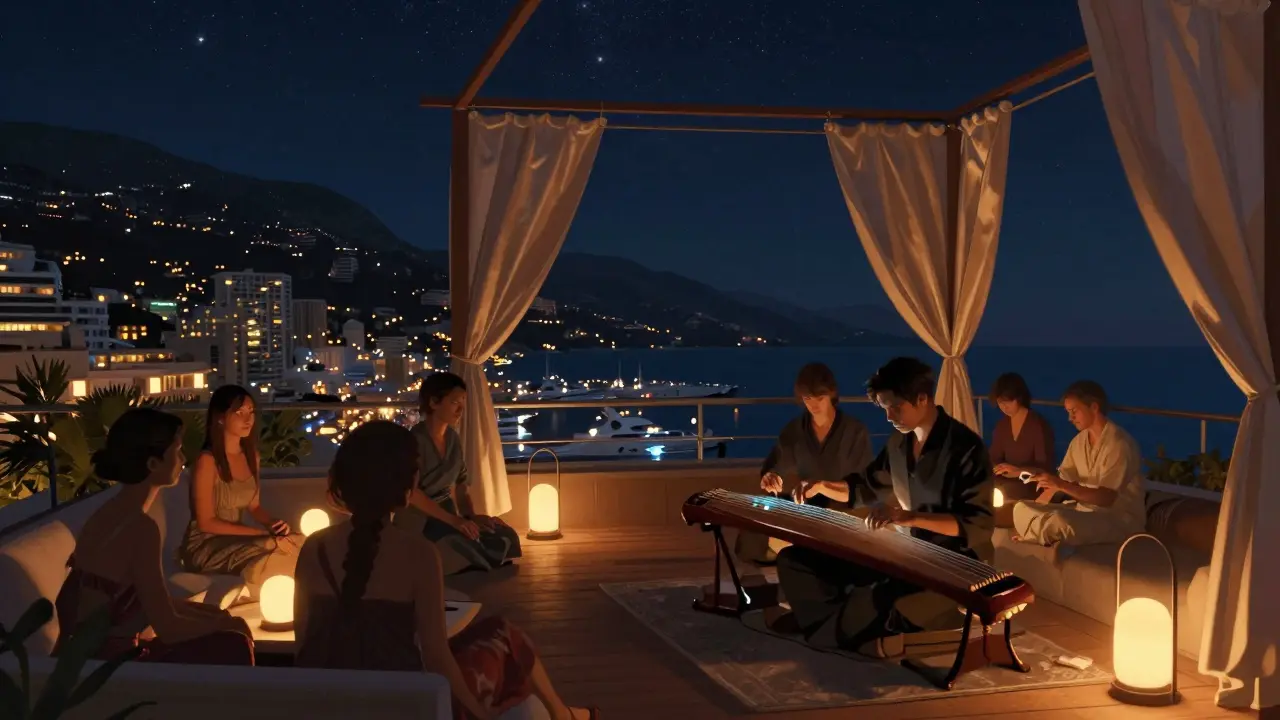
Inside, the space is split into three zones: the main lounge with low tables and floor seating, a quieter alcove lined with silk curtains, and a rooftop terrace that opens in summer. The terrace is where the real secrets live. On clear nights, you can see the Mediterranean glittering below, the lights of the Yacht Club twinkling like stars fallen to earth.
The music changes every night. Sometimes it’s Indian classical. Sometimes it’s Japanese ambient. Once, I heard a live koto player blending with a looping electronic beat. No one clapped. No one moved. We just listened.
What You’ll Drink (And Why It Matters)
The cocktails here aren’t made to impress. They’re made to dissolve stress.
The signature drink, the Buddha’s Whisper, is a blend of yuzu, elderflower, green tea syrup, and a splash of sparkling wine. It’s served in a chilled glass with a single orchid petal floating on top. You sip slowly. The flavor is light, floral, and clean-like morning mist over a temple garden.
There’s also the Lotus Bloom, made with jasmine-infused gin, lime, and a touch of honey. It doesn’t knock you out. It wraps you in calm.
And yes, there’s wine. And sake. And non-alcoholic options that taste like they were crafted by someone who actually cares. No sugary mixers. No neon-colored nonsense. Just ingredients that belong together.
When to Go-And When to Skip It
Don’t come on a Friday night if you want peace.
Weekends in Monaco bring the jet set. The crowds are thinner than in Paris or London, but they’re still there. If you want the real Buddha Bar experience, go on a Tuesday or Wednesday. The music is louder, the lights are dimmer, and the energy? It’s pure.
Arrive between 9:30 and 10:30 PM. That’s when the staff turns down the lights, the first notes of the night’s playlist begin, and the room feels like it’s holding its breath.
Leave before midnight if you want to remember it clearly. Stay past 1 AM, and you’ll be surrounded by people who came for the buzz, not the beauty.
Buddha Bar vs. Other Monaco Lounges
| Feature | Buddha Bar | Le Sporting | Jimmy’z |
|---|---|---|---|
| Music Style | Ambient, fusion, downtempo | Live jazz, swing | EDM, pop, club hits |
| Lighting | Soft, warm, candlelit | Dim, elegant | Strobe, neon |
| Seating | Floor cushions, low tables | Classic bar stools | High tables, standing only |
| Dress Code | Elegant casual | Smart casual | Strict formal |
| Best For | Quiet connection, reflection | Conversation, romance | Dancing, partying |
| Quiet Hours | 9:30 PM - 11:30 PM | 8 PM - 10 PM | Never |
If you want to dance until 3 AM, go to Jimmy’z. If you want to sip champagne and watch the celebrities, Le Sporting is your spot. But if you want to feel like you’ve stepped into a hidden world-one that doesn’t care about your Instagram likes-Buddha Bar is the only place that delivers.
What to Expect During Your Visit
You won’t be greeted with a loud “Welcome!”
You’ll be greeted with silence. A host will nod, smile softly, and lead you to a seat. No menus handed out. No rushed service. The staff moves like shadows-present, but never intrusive.
There’s no rush to order. You can sit for 20 minutes just watching the light shift across the walls. When you’re ready, a server will appear, ask if you’d like to try something new, and disappear again.
Phones are discouraged. Not because they’re banned-but because no one else is using theirs. And when you realize you haven’t checked your phone in an hour, you’ll feel something rare: peace.
How to Book and What It Costs
You can’t just walk in on weekends. Reservations are required.
Book online through the official Buddha Bar website. Choose your date, time, and number of guests. There’s no cover charge. But you must spend a minimum of €60 per person on drinks or food.
Drinks range from €18 for a cocktail to €45 for a bottle of rare sake. Small plates-like truffle dumplings or miso-glazed eggplant-start at €14. It’s not cheap. But you’re not paying for alcohol. You’re paying for an hour of quiet in a noisy world.
Safety and Etiquette
It’s one of the safest spots in Monaco. Security is quiet, professional, and invisible. You won’t see a single uniform. But if something feels off, someone will appear without making a scene.
Etiquette is simple: be calm. Don’t raise your voice. Don’t take photos. Don’t drag in a group of 10 people who want to “party.” This isn’t a party. It’s a pause.
And if you leave before the last song ends? You missed the point.
Frequently Asked Questions
Is Buddha Bar in Monaco still open?
Yes. The Monaco location has been operating continuously since 2003. It’s one of the most consistent venues in the Buddha Bar chain, with the same owner, same music curator, and same quiet philosophy. It’s open Wednesday through Sunday, from 8 PM to 2 AM.
Do I need to dress up?
You don’t need a tuxedo or evening gown, but you should look intentional. No flip-flops, no hoodies, no sportswear. Think dark jeans, a silk shirt, or a simple dress. The crowd is stylish but understated. You’ll stand out if you try too hard-or if you don’t try at all.
Can I bring a group?
Groups are welcome, but no larger than six. Larger parties are discouraged because they disrupt the atmosphere. If you’re coming with a group, book early and ask for the back alcove-it’s quieter and more private.
Is it worth the price?
If you’ve ever felt overwhelmed by noise, crowds, or the pressure to perform-even at a bar-then yes. This isn’t about value. It’s about restoration. You’re not buying a drink. You’re buying back a piece of your calm. And that’s priceless.
What’s the best time of year to visit?
Late spring (May) and early fall (September) are perfect. The weather is mild, the terrace is open, and the crowds are smaller than in July or August. Winter nights are magical too-cozy, intimate, with the harbor lights reflecting off the wet pavement outside.
Some nights, the music fades into silence. No one claps. No one moves. The room holds its breath. And then, just as you start to wonder if it’s over, a single note from a bamboo flute rises-soft, clear, and impossibly beautiful.
That’s when you know: you’ve been somewhere that doesn’t exist for everyone.
And you’ll never forget it.
Taylor Webster
January 26, 2026 AT 04:10The moment the sitar blends with the bassline, everything else just fades out like a bad Wi-Fi signal. I’ve been to places with neon and DJs and loud voices, but this? This is the first time I felt my soul exhale.
David Din Greenberg
January 27, 2026 AT 07:09You think this is spiritual? It’s just expensive aesthetic capitalism dressed up in incense and velvet. They charge €45 for sake because they know you’re tired enough to pay for the illusion of peace. Real zen doesn’t require a minimum spend.
Nadia Di Qual
January 27, 2026 AT 16:12David, you’re right it’s pricey-but you’re missing the point. It’s not about the sake. It’s about the silence you didn’t know you were starving for. I went last month after my divorce. I didn’t drink. I just sat. Left with my first real breath in years.
Leonard Fusselman
January 29, 2026 AT 10:14While I appreciate the poetic description, the structural integrity of this piece is commendable, though the lack of Oxford commas in the cocktail descriptions is a minor grammatical infraction. Furthermore, the assertion that Buddha Bar offers 'sanctuary' is semantically precise, yet culturally reductive-it conflates aesthetic ambiance with spiritual practice, a common Western misappropriation.
That said, the operational details regarding reservation protocols and dress code are accurately delineated and reflect a sophisticated understanding of experiential consumption in elite urban environments.
Edith Mcdouglas
January 30, 2026 AT 02:18Leonard, your pedantry is as tedious as a 3 AM Uber driver reciting Yelp reviews. But you’re right-this isn’t zen. It’s curated melancholy for people who can’t afford therapy but can afford €18 cocktails. The orchid petal? A prop. The silence? A marketing tactic. The real magic is how they turned ennui into a luxury good-and we all line up to pay for it.
And yes, I’ve been there. Twice. The first time, I cried into my Lotus Bloom. The second time, I didn’t. That’s the point, isn’t it? It doesn’t fix you. It just lets you feel how broken you are… quietly.
minakshi gaval
February 1, 2026 AT 01:59Did you know the original Buddha Bar in Paris was secretly funded by a Swiss pharmaceutical company? They wanted to create a space where stressed executives could be hypnotized by ambient music so they’d stop asking for antidepressants. The flute melodies? Engineered to lower cortisol. The dim lighting? Designed to trigger alpha brainwaves. Even the velvet curtains were chosen for their sound-dampening properties. This isn’t a bar-it’s a behavioral lab.
And the minimum spend? That’s not to cover drinks. It’s to filter out the people who might talk too much. The staff are trained to recognize signs of emotional release. If you cry, they bring you tea. If you laugh too loud? You’re asked to leave. They don’t want chaos. They want controlled surrender.
I read the patents. It’s all there.
Chase Chang
February 2, 2026 AT 10:57THIS. THIS IS WHAT THE WORLD NEEDS RIGHT NOW. I’ve been to clubs where people screamed over EDM while taking selfies with their drinks. Buddha Bar? It’s like someone hit pause on the entire planet. I sat there for two hours. Didn’t check my phone. Didn’t think about work. Didn’t even notice my jacket got wrinkled. I felt alive-not because of the music, but because I stopped trying to be someone else for once.
If you’re reading this and you’re burnt out-go. Just go. Don’t overthink it. Don’t read the reviews. Don’t wait for the ‘perfect’ night. Go on a Tuesday. Sit in the back. Breathe. Let it wash over you. You won’t regret it. I promise.
George Merkle
February 4, 2026 AT 10:13For those of us who grew up in places where silence was treated like a threat, Buddha Bar is a quiet revolution. No one tells you to smile. No one demands you be loud to prove you belong. The music doesn’t shout. The staff doesn’t hustle. Even the drinks are made with patience. That’s rare. That’s not marketing. That’s respect.
I’m Indian-American. I’ve been to temples where monks meditated for hours without speaking. I’ve been to New York bars where the noise was a weapon. Buddha Bar sits between them-not as a copy, but as a bridge. It doesn’t sell enlightenment. It just makes space for it to show up.
And yes, it’s expensive. But so is therapy. So is a flight to Bali. So is buying another pair of shoes to fill a void. This? This fills a different kind of void. One you didn’t know you had.